Electronics, pharma, defence — three sectors driving India's cleanroom boom. A look at what air showers actually do, what separates good ones from basic ones, and why Cronax Industries is a trusted name among air shower manufacturers in India.
Something significant is happening across India's industrial map right now.
Semiconductor units are coming up in Gujarat. Defence electronics are being assembled in Uttar Pradesh. Pharmaceutical exporters in Hyderabad are upgrading facilities to meet US FDA and EU GMP standards. And across all of these, one thing keeps appearing at the entry point of every controlled environment — an air shower room.
It's not a coincidence.
Make in India Changed What Indian Factories Need to Build
When Make in India launched, the conversation was mostly about scale — how many units, how fast, how cheap. A decade later, the conversation has shifted. Global buyers don't just want Indian-made products. They want Indian-made products that meet international quality benchmarks.
That shift has consequences for the factory floor.
Electronics manufacturing is one of the clearest examples. India's smartphone output has grown dramatically — Apple, Samsung, and a dozen other brands now assemble here. But circuit boards, semiconductors, and display components cannot tolerate dust. A single particle landing on the wrong surface during assembly can render a component useless.
This is where cleanroom technology stopped being optional.
What a Cleanroom Actually Is — and Why the Entry Point Is Everything
A cleanroom is a controlled environment where airborne particulates, temperature, humidity, and pressure are maintained within strict limits. ISO classifications define exactly how clean a room needs to be — ISO Class 5 allows fewer than 3,520 particles per cubic metre. ISO Class 7 allows significantly more. Pharmaceutical sterile fill-finish rooms operate at the tightest standards. Electronics assembly lines work somewhere in the middle.
Getting the room right is one part of it. Keeping it right is the harder part.
The biggest contamination threat in any cleanroom isn't the equipment inside — it's the people walking in. Human clothing carries thousands of particles. Hair, skin cells, fabric fibres — all of it becomes contamination the moment someone steps inside without proper decontamination.
That's the problem an air shower solves.
Air Showers — Small Chamber, Big Role
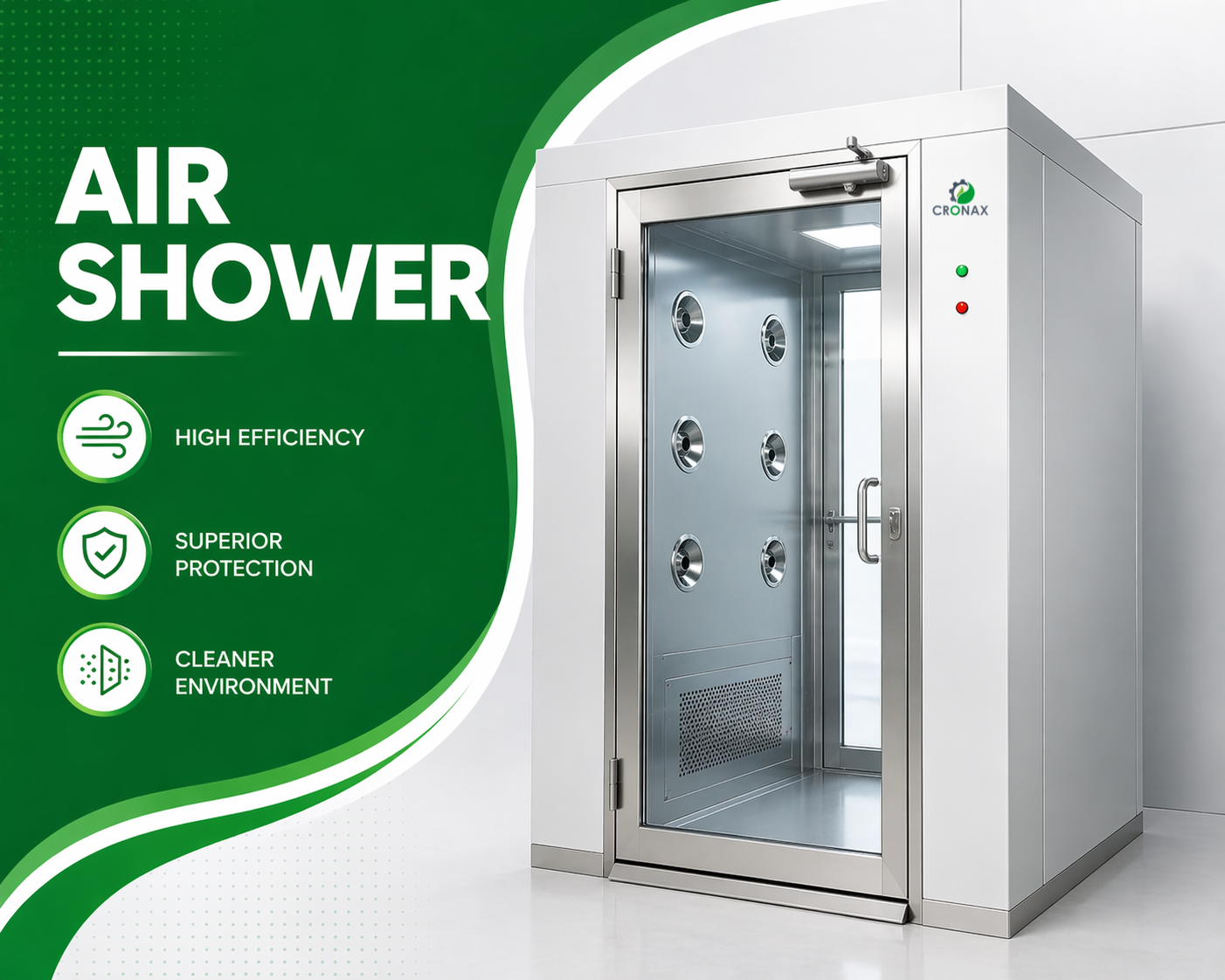
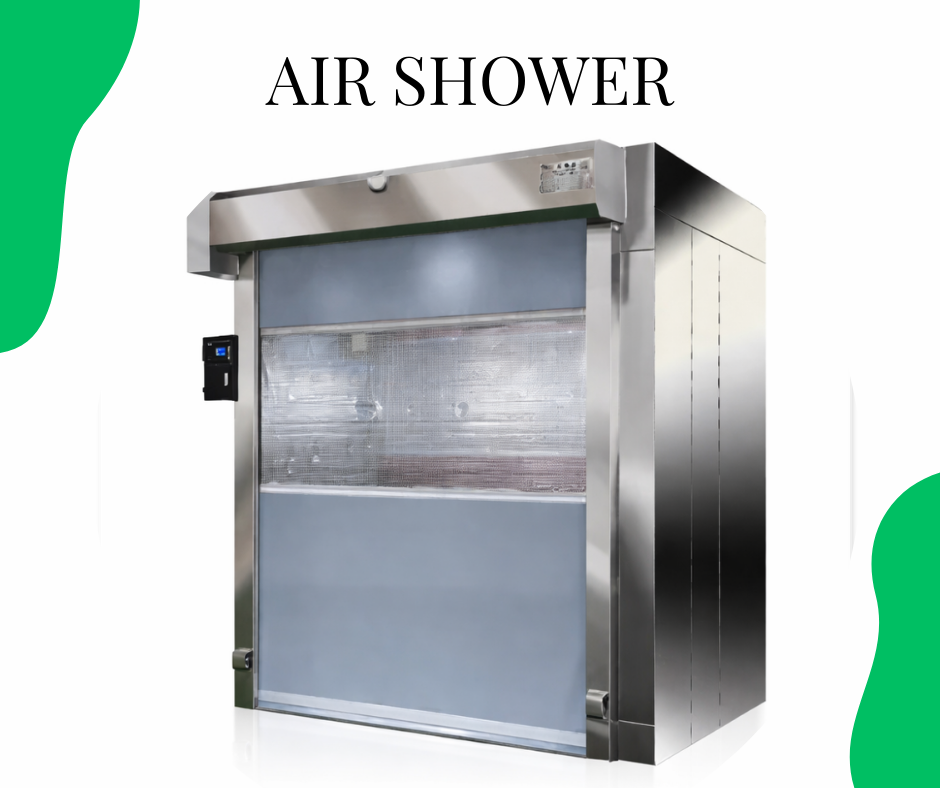
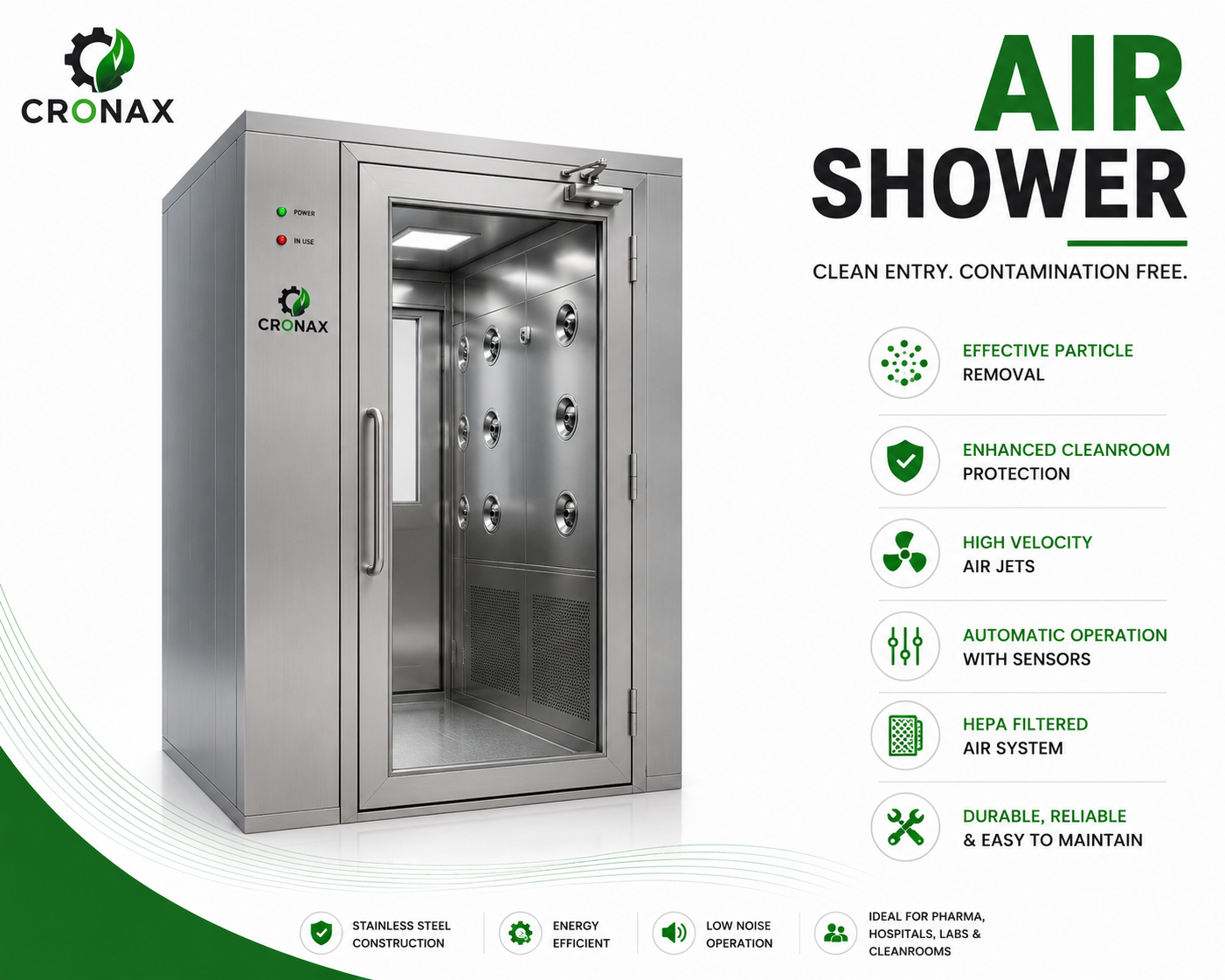
An air shower is a self-contained decontamination chamber placed at the entrance of a cleanroom. Before anyone enters, they step inside, the doors lock, and high-velocity HEPA-filtered air blows from multiple directions for a set duration — typically 15 to 30 seconds.
That blast of filtered air removes loose particles from clothing, hair, and footwear. What comes off gets captured by the return filters. What enters the cleanroom is a person who is significantly cleaner than when they walked in.
It sounds simple. In practice, it's one of the most effective contamination-control tools a cleanroom facility has.
An air shower clean room setup typically integrates the chamber into the architectural flow — there's no bypassing it. You cannot enter without going through. That's by design.
Why Indian Manufacturers Are Installing These Faster Than Ever
A few things are converging at once.
Export compliance pressure. Pharmaceutical companies supplying to regulated markets — the US, EU, Japan — face regular inspections. Cleanroom standards are audited. An air shower at the entry isn't just good practice; it's often a documented requirement.
Electronics PLI scheme momentum. The Production Linked Incentive scheme pushed electronics manufacturers to scale up fast. Scaling up means more workers entering controlled environments more frequently. More foot traffic means more contamination risk — and more need for robust decontamination at every shift change.
Defence and aerospace entry. India's push toward indigenizing defence electronics has brought a new category of manufacturers into the cleanroom space — companies that had never needed ISO-classified environments before and are now building them from scratch.
All three segments are actively sourcing air showers.
What Separates a Good Air Shower From a Basic One
Not every air shower chamber performs the same way. A few things actually matter when evaluating one for your facility.
Nozzle design and coverage. High-velocity air needs to hit from multiple angles — sides, top, and sometimes underfoot. A chamber with only ceiling jets leaves blind spots. Poorly aimed nozzles don't dislodge particles effectively, which defeats the purpose.
HEPA filter rating. The air being blown in must be genuinely clean. HEPA H14 filters capture 99.995% of particles at 0.3 microns. Lower-rated filters let contamination back in — which is worse than no air shower because it gives a false sense of decontamination.
Interlock system. Neither door of the chamber should be able to open simultaneously. The interlock ensures one door closes before the other opens — maintaining the pressure differential between the corridor and the cleanroom. A faulty or absent interlock is a serious gap.
Cycle time and customization. Different ISO classes require different exposure durations. A good air shower manufacturer will offer programmable cycle times and variable air velocity rather than a one-size-fits-all setting.
Build quality for Indian conditions. Powder-coated stainless steel or GI construction that holds up through high humidity and temperature variation matters here. Units that work fine in a European climate can develop sealing problems in a Chennai summer or a Noida winter.
Cronax Industries — Air Shower Manufacturers Built for Indian Facilities
Among the air shower manufacturers operating in India, Cronax Industries has built a consistent reputation for supplying cleanroom entry systems that are engineered for actual Indian industrial conditions — not adapted from overseas specs.
Cronax makes rooms that have clean air; these rooms are called air shower rooms. They make these rooms for one person or for a lot of people, like a tunnel. The air in these rooms is very clean because it has filters and it moves very fast. The doors in these rooms are also very special; they can only be opened one at a time. The rooms are made of metal that can be cleaned easily. This is important for places that make medicine, electronics and food because these places need to be very clean.
What stands out about Cronax is the application-specific approach. A pharmaceutical company in Hyderabad has different cleanroom requirements than an FMCG packaging unit in Pune or a PCB assembly line in Noida. Cronax doesn't sell a single standard unit to everyone — the chamber dimensions, filter grade, cycle programming, and integration with gowning room layouts are worked out per project.
Cronax. Installs these rooms all over India. They have worked with companies that make medicine and with new companies that make electronics. These new companies are growing because of help from the government.
If you are making a clean room or if you want to make your old room better, you should talk to Cronax. They can help you before you decide what you want to do. Cronax can have a conversation with you; this will be very helpful.
Final Thought
India is not just manufacturing more — it is manufacturing more precisely. Cleanroom environments that would have been considered specialist infrastructure five years ago are now standard requirements for a growing number of sectors.
Air showers sit at the intersection of compliance, quality, and operational discipline. They're not expensive relative to the cost of contamination events, failed audits, or rejected export consignments.
As India continues to move up the manufacturing value chain — from assembly to components to original design — the facilities doing it right will have cleanroom infrastructure in place from day one.
The entry point is a good place to start.
Cronax Industries manufactures and supplies air shower rooms, cleanroom entry systems, and contamination control solutions for pharmaceutical, electronics, defence, and industrial facilities across India.