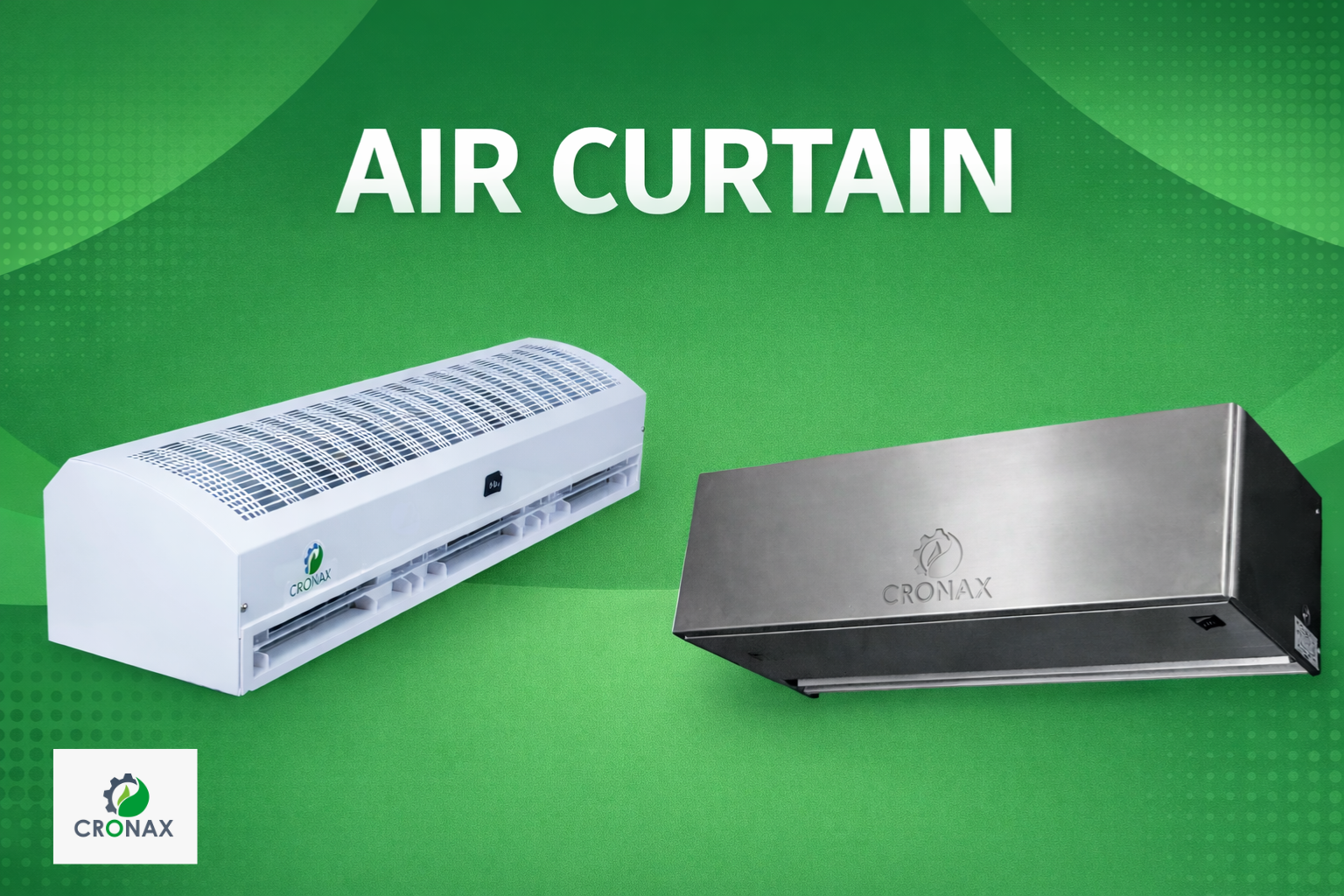
Discover how air curtains for doorways protect hospitals and clinics from insects, contamination, temperature loss, and airborne pathogens — without slowing down patient or staff movement.
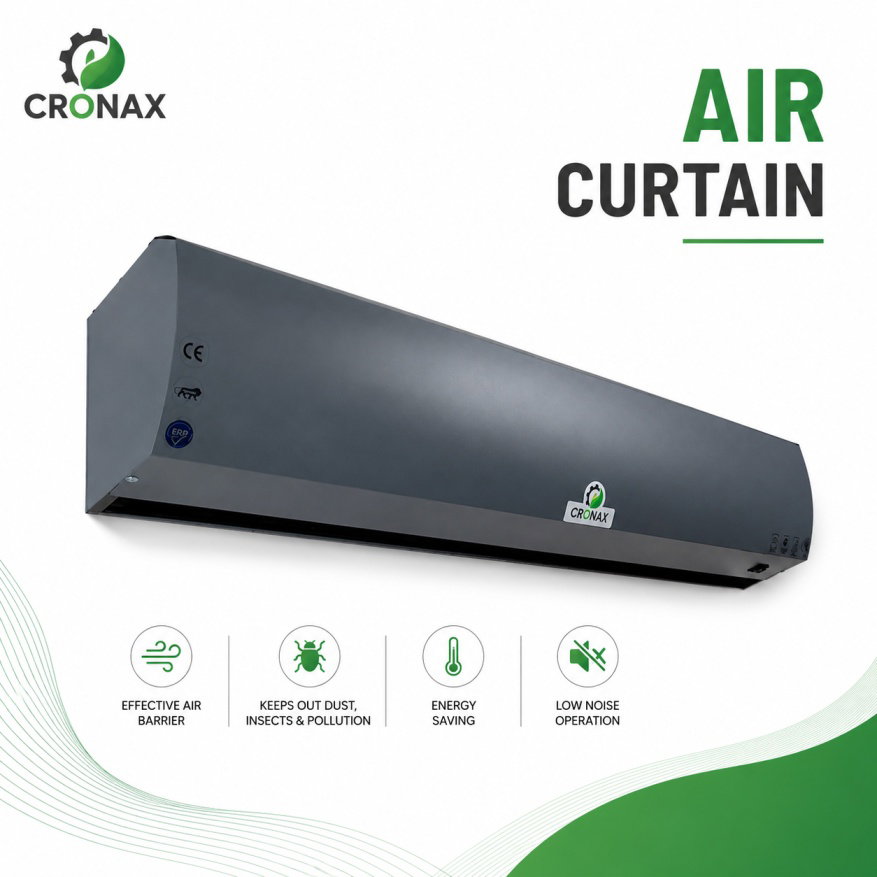
Walk into any good hospital in India today. You will feel a breeze at the entrance. It moves steadily downward as you step through the door.
That's an air curtain. It does more than just keep you comfortable.
In a hospital, the entrance is always busy. People with illnesses come in. Visitors arrive from outside. Staff move in and out multiple times a day. Every time the door opens, outside air can come in. This air has dust, humidity, vehicle fumes, pollen, and flying insects. The air can enter a space that's meant to be clean and safe.
An air curtain door solves this problem. It doesn't block the doorway. Instead, it creates a stream of air across the door. This stream deflects contaminants and blocks insects. It keeps the air clean. People can still walk through the door freely.
This article explains how air curtains work in hospitals and clinics. It talks about the problems they solve. More hospitals in India are seeing air curtains as necessary for keeping things clean. They are not a nice extra.
What an Air Curtain Actually Does
Before getting into the hospital-specific benefits, it helps to understand the basic mechanism.
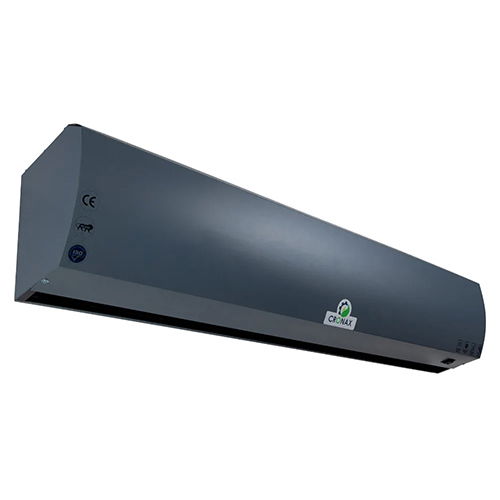
An air curtain is a device installed above a doorway — or occasionally on the side — that projects a continuous, uniform stream of air across the full width of the opening. This air stream acts as a physical barrier between the indoor and outdoor environments, even when the door is open or absent entirely.
The air velocity is calibrated carefully. Too slow and the barrier breaks. Too fast, and it creates discomfort or turbulence for people walking through. The best air curtain installations find the balance where the barrier is effective, but the entry experience feels natural.
In healthcare settings, this basic principle delivers benefits across several dimensions — hygiene, infection control, insect exclusion, energy efficiency, and patient comfort — all simultaneously.
Benefit 1: Blocking Insects Without Chemicals
This is the most visible benefit, and in the context of Indian hospitals and clinics, it's a significant one.
Flying insects — flies, mosquitoes, moths — are persistent. In warm, humid Indian conditions, keeping them out of a hospital entrance using only a conventional door is genuinely difficult. Staff prop doors open during busy periods. Patients hold doors as they enter. Every few seconds of open door time is an opportunity.
A properly installed air curtain for doorway creates an airflow barrier that flying insects cannot physically penetrate against the force of the moving air. The air velocity acts as a deterrent — insects approaching the doorway encounter a continuous airstream that pushes them away.
This matters more than it might seem. Flying insects carry pathogens. A fly that's been on an outdoor surface and then lands on a wound dressing, a food tray, or a sterile instrument is a direct contamination event. In a hospital environment where infection control is non-negotiable, eliminating that vector chemically — with insecticides, sprays, or fumigants — is itself a problem because of the chemical exposure to vulnerable patients.
An air curtain eliminates the insect problem without introducing any chemicals into the environment at all. It's continuous, passive, and chemical-free. That combination is genuinely valuable in clinical settings.
Benefit 2: Reducing Airborne Contamination at Entry Points
Hospitals manage a challenging paradox: they treat people who are sick, which means the environment is regularly exposed to pathogens, while simultaneously needing to protect patients who are vulnerable to those same pathogens.
Every time a door at a hospital entrance, ward entry, OT corridor, or pharmacy opens, there's a brief but real exchange of air between the controlled indoor environment and the adjacent space. In a busy facility, these brief exchanges add up. Dust, particulate matter, outdoor microorganisms, and humidity all enter through these moments of open-door exposure.
Research published in healthcare ventilation literature has shown that air curtains significantly reduce the migration of airborne contaminants through open doorways. The continuous downward air stream deflects incoming air and prevents the mixing of indoor and outdoor air columns — maintaining the integrity of the indoor environment during the open-door period.
For hospital wards, outpatient waiting areas, pharmacy dispensaries, and diagnostic labs, this contamination reduction has direct infection control value. It's one layer among several in a comprehensive hospital hygiene protocol — not a replacement for HEPA filtration or hand hygiene, but a meaningful complementary barrier at entry points.
Benefit 3: Maintaining Temperature and Humidity Control
Indian hospitals spend significant money conditioning indoor air — cooling in summer, managing humidity year-round, and maintaining specific temperature ranges in OT suites, ICUs, and pharmacy cold zones.
Every open door is a thermal breach. Hot, humid outdoor air enters, and conditioned indoor air escapes. The HVAC system then compensates — running longer, working harder, consuming more electricity.
An air curtain door at high-traffic entries dramatically reduces this thermal exchange. By maintaining an air barrier across the doorway during open-door periods, the air curtain limits the volume of outdoor air that enters the conditioned space. The HVAC system doesn't need to compensate as aggressively. Energy consumption falls.
For large hospitals with dozens of entry points and HVAC systems running around the clock, the cumulative energy saving from well-placed air curtains across the facility is meaningful — often a 20–30% reduction in thermal losses at door openings.
In clinics and smaller healthcare facilities where electricity costs are a genuine operating expense, this energy efficiency benefit directly affects the monthly bill.
Benefit 4: Protecting Operating Theatres and Sterile Zones
This is where air curtains move from comfort infrastructure to genuine clinical infrastructure.OT suites and sterile procedure rooms maintain positive pressure — higher air pressure inside than in adjacent corridors — to prevent contamination from entering during procedures. When OT doors open, even briefly, that positive pressure cascade is disrupted, and unfiltered air from the corridor can enter.
Air curtains installed at OT entry corridors and anteroom doorways add a layer of protection at these critical transitions. Combined with the positive-pressure HVAC design, an air curtain door at the corridor-to-anteroom boundary limits the volume of corridor air that can migrate toward the sterile zone during door-opening events.
In pharma-grade cleanrooms, this application is well-established. In hospital OT environments, the principle is identical — the difference is that the stakes are even higher because a human patient is the sterile field being protected.
Benefit 5: Touchless Entry — Less Contact, Less Risk
One of the most important infection control lessons from the post-pandemic period is that contact surfaces are a significant transmission pathway. Door handles, push plates, and door frames are among the highest-contact surfaces in any building. In a hospital, where those surfaces are touched by sick patients, concerned visitors, and clinical staff in rapid succession, that contact risk is amplified.
Air curtains work best when paired with automatic sliding or swing doors — creating a fully contactless entry experience. The door opens automatically. The air curtain provides the hygiene barrier. Nobody touches anything.
Many hospitals in India have started pairing air curtains with automatic sliding doors at main entrances, ward entries, and pharmacy access points specifically for this reason. Less touching means less pathogen transfer. Less pathogen transfer means lower hospital-acquired infection (HAI) rates. Lower HAI rates mean better patient outcomes and fewer regulatory compliance problems.
It's a simple chain of reasoning with a real clinical payoff.
Benefit 6: Noise and Odour Containment
This benefit doesn't get discussed as much as contamination control, but it matters for the patient experience.
Hospitals have areas with very different acoustic profiles. An OT corridor should be quiet. A triage area can be noisy. A patient ward needs calm. Without barriers at doorway transitions, sound travels freely between these areas — affecting patient recovery, clinical concentration, and the overall environment.
Air doors provide some degree of acoustic dampening at doorways — not soundproofing, but a meaningful reduction in sound transmission through open entries. The moving air column disrupts the sound pathway between adjacent spaces.
Similarly, hospitals deal with odours that need to be contained — from procedure rooms, patient wards, medical waste storage, and hospital kitchens. An air curtain at a doorway helps contain those odours within their zone rather than allowing them to migrate into adjacent areas where patients or visitors are present.
Where to Install Air Curtains in a Hospital or Clinic
The way an air curtain works is simple: it is useful to have one in any doorway where a lot of people walk through. We need to keep the air separate.
Hospital Entrance: This is the busiest entrance in any hospital. An air curtain here stops insects and bad air from outside, like the air from cars, from coming in, and it also stops pollen from coming in while keeping patients and visitors comfortable.
Corridor Entry: An air curtain here helps keep the air clean and stops germs from spreading in the most important part of the hospital.
Ward Entry Doors: an air curtain here stops germs from moving from one ward to another in hospitals where there are wards for people with infections right next to wards for people who are not sick.
Pharmacy and dispensary entries: an air curtain here keeps the pharmacy clean and free of pests. It also helps keep the temperature right for medicines that need to be kept cool.
Hospital kitchen and canteen: we need to keep insects out of the kitchen where food is made and served, and an air curtain at the kitchen door does this without using chemicals.
ICU and NICU Entries: These are areas where patients are very sick, and an air curtain here helps keep the air clean and stops germs from spreading.
Diagnostic Lab Entries: labs need to be clean and free of dust and particles that can ruin tests or make equipment not work right, and an air curtain helps with this.
What to Look for in an Air Curtain for a Healthcare Facility
Not all air curtains are the same. In a hospital, it really matters what you choose.
Air velocity and coverage width: The air curtain must cover the width of the doorway. No gaps at the edges where bugs or bad air can get in. For keeping bugs out to a minimum, an air speed of 8 meters per second at floor level is what is usually recommended.
Noise level: In a hospital, a loud air curtain is not okay. Look for units that're quiet with noise levels below 55 decibels in areas where patients are. High-efficiency EC motors are usually much quieter than AC motor units.
Hygienic housing design: The air curtain unit itself must be easy to clean. Smooth, non-porous surfaces without ledges or crevices that trap dust are what you want for hospital installations. A stainless steel housing is ideal for places like pharmacies, ICUs and OT corridors.
Filter integration: Some top air curtain models in India now have HEPA or UV-C filtration built into the air stream. Meaning the air curtain isn't a barrier but also actively filters and disinfects the air it moves. This is especially valuable in high-risk hospital areas.
Energy efficiency: Hospitals run 24 hours a day. An energy-efficient air curtain. With an EC motor and smart speed control that adjusts to the door status. Can really impact operating costs over its lifetime.
Control options: Timer-based door-status-linked or sensor-triggered operation ensures the air curtain runs when the door is open or about to open, rather than continuously, at full power.
Why Cronax Industries Is Worth Considering
For hospitals, clinics, diagnostic labs, and healthcare facilities across India looking for air curtains that genuinely fit a clinical environment — not just a general commercial air door adapted for healthcare use — Cronax Industries brings application-specific knowledge to the selection process.
Their air curtain range for healthcare facilities covers the spectrum from main entrance air doors to pharmacy and OT corridor installations, with specifications selected for Indian climate conditions — the high ambient temperatures, monsoon humidity, and dust exposure that make generic specifications from cooler climates inadequate.
What makes Cronax a practical choice for healthcare procurement teams is its understanding of hygiene-first design. Their units come with hygienic housing options, low-noise operation appropriate for clinical settings, and energy-efficient motors suited to the continuous operation that healthcare facilities demand.
Among air curtain manufacturers serving the Indian market, Cronax combines manufacturing quality with the kind of application-led guidance that helps facilities make the right specification decision — not just the cheapest one.
For facility managers preparing a new hospital section, upgrading an existing clinic entry, or looking to address an FSSAI compliance gap at a hospital kitchen entry, a conversation with Cronax about the right air curtain specification for each location is time well spent.
Common Mistakes Healthcare Facilities Make When Installing Air Curtains
Getting an air curtain installed is straightforward. Getting it right takes a bit more thought.
Installing a unit that's too narrow. The air curtain must cover the full width of the doorway. Even a small gap at the edge creates an entry point for insects and outdoor air that defeats the purpose.
Choosing based on price alone. A low-cost air curtain with inadequate air velocity, poor coverage uniformity, or a noisy motor creates more problems than it solves in a clinical environment. The specification should be determined by the application, not the budget alone.
Ignoring the mounting height. Air curtain performance drops significantly if the unit is mounted too high above the doorway. Check the manufacturer's recommended maximum mounting height for the specific model and application.
No maintenance schedule. The air curtain filter and motor need periodic servicing. An air curtain with a clogged filter or degraded motor performance is less effective as a hygiene barrier — and in a healthcare facility, reduced effectiveness has direct clinical consequences.
Installing without considering door type. An air curtain works best with a door that opens predictably and fully. On a manually propped door or an irregular-opening door, the air curtain may not perform as expected. Pairing with automatic doors gives the best results.
Final Thoughts
Hospitals and clinics in India face a specific and demanding hygiene challenge: maintaining controlled, clean indoor environments in a climate and context that constantly pushes back — heat, humidity, insects, dust, and continuous foot traffic.
Air curtains for doorways address several of these challenges simultaneously. They're not a single-point solution — they work best as part of a broader infection control and hygiene infrastructure. But the specific problems they solve — insect exclusion, airborne contamination reduction, thermal control, touchless entry support, and odour containment — are exactly the problems that high-traffic healthcare facility entries face every day.
The best air curtain installation is the one that fits the specific doorway, the specific clinical environment, and the specific hygiene requirements of the zone being protected. Getting that specification right is where a knowledgeable air curtain supplier makes a real difference.
Frequently Asked Questions
How does an air curtain improve hygiene in a hospital?
An air curtain creates a continuous high-velocity air barrier across a doorway that blocks flying insects, reduces airborne contaminant ingress, limits thermal exchange between indoor and outdoor environments, and — when paired with automatic doors — eliminates contact with door surfaces. In a hospital where infection control is central to patient safety, these functions together make the entry point significantly more hygienic than an open or conventionally doored entry. Air curtains are particularly effective at high-traffic entries where doors are opening frequently and conventional barriers are impractical.
Where should air curtains be installed in a hospital?
The most important locations are the main entrance, OT corridor entries, ICU and NICU access points, pharmacy and dispensary doors, ward entry transitions, hospital kitchen doors, and diagnostic lab entries. Each of these locations has a specific hygiene requirement — insect exclusion, positive pressure support, temperature maintenance, or contamination zone separation — that an appropriately specified air curtain addresses. The specification (air velocity, width, noise rating, housing material) should be tailored to each location.
Do air curtains actually keep insects out of hospitals?
Yes, effectively. A properly installed air curtain for doorway with adequate air velocity creates a physical force that flying insects cannot overcome. For insect control specifically, the air velocity at floor level should reach a minimum of 8 m/s, and the unit must cover the full width of the opening without gaps at the edges. Air curtains are a chemical-free insect control solution — particularly important in healthcare environments where insecticides and fumigants are inappropriate near patients.
Can air curtains help reduce energy costs in hospitals?
Yes. Every time a hospital door opens, conditioned indoor air escapes and hot, humid outdoor air enters, forcing the HVAC system to compensate. Air curtains limit this thermal exchange during open-door periods, reducing the compensation load on the HVAC system. Across a large hospital with many high-traffic entry points running HVAC continuously, the cumulative energy saving from air curtains can be significant — typically in the range of 20–30% reduction in thermal losses at protected doorways.
What is the difference between an air curtain and an air door?
The terms are often used interchangeably. An air door generally refers to the same technology as an air curtain — a device that projects a stream of air across a doorway to create an invisible barrier. In some contexts, "air door" is used specifically to describe units installed where there is no physical door at all, creating a complete air barrier as the sole separation between two spaces. In most healthcare applications, air curtains are installed alongside physical doors (particularly automatic sliding doors) to combine physical and air barrier protection.
Are there air curtains with UV or HEPA filtration for hospital use?
Yes. Some of the best air curtain models available in India now integrate HEPA filtration or UV-C disinfection into the air stream. These units don't just create a barrier — they actively filter and disinfect the air passing through the curtain zone, providing a higher level of pathogen control than a standard air curtain. For OT corridors, ICU entries, and high-risk clinical areas, HEPA or UV-integrated air curtains are worth specifying. Ask your air curtain manufacturer specifically about these options for clinical applications.
How often does a hospital air curtain need maintenance?
Air curtains in hospital settings should be serviced every 6–12 months, depending on usage intensity and environmental conditions. Maintenance typically includes cleaning or replacing the inlet filter, checking motor performance and belt tension (if applicable), verifying air velocity uniformity across the door width, and cleaning the housing. In dusty environments or locations near hospital kitchens, more frequent filter checks are advisable. A well-maintained air curtain performs consistently over many years — a neglected one starts failing as a hygiene barrier well before the unit itself reaches end of life.
Looking for air curtains for your hospital, clinic, pharmacy, or healthcare facility in India? Cronax Industries supplies and installs air curtain doors and air doors for healthcare environments — specified for clinical hygiene requirements, Indian climate conditions, and energy-efficient continuous operation. Contact us to discuss the right air curtain solution for each entry point in your facility.