Hygiene Stations for Food and Pharma Entry Control
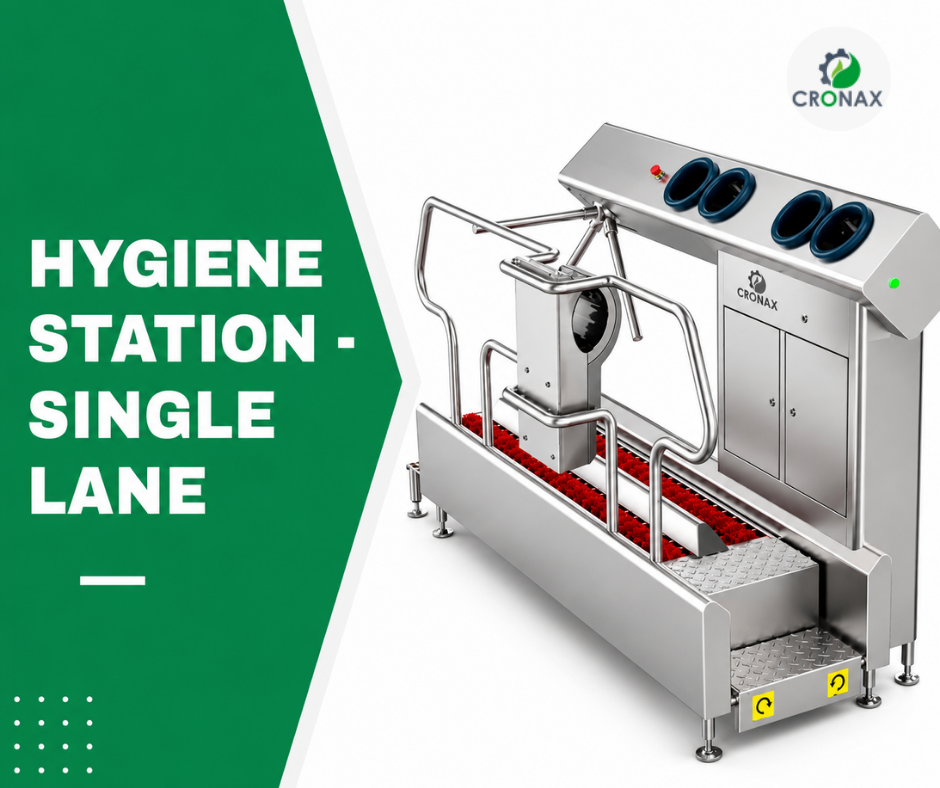
A clean production area can still face contamination at the doorway. Shoes carry dust. Hands carry risk. Entry points decide a lot.
That is why many facilities now treat the hygiene station as a core control point, not a side feature. For food processing plants, pharma facilities, and packaging industries, it supports sanitation before people enter production areas. It also helps teams maintain safety and compliance standards.
This post explains what a hygiene station does, what it includes, where it fits, and why it matters for controlled environments.
Key takeaways
- A hygiene station supports sanitation before production entry.
- It includes hand sanitizing, boot or shoe cleaning, hand washing, and access control integration.
- Cronax provides hygiene stations for food processing, pharma, and packaging facilities.
What Is a Hygiene Station?
A hygiene station is an entry control solution used before production access. Its purpose is simple. It helps people clean up before they cross into sensitive areas.
That matters most where contamination can affect product quality, safety, or compliance. Food plants need cleaner entries. Pharma spaces need controlled access. Packaging environments also benefit from a more disciplined process at the doorway.
Cronax positions hygiene stations as essential entry control for food and pharma industries. The solution supports sanitation before entering production areas, which helps industries maintain safety and compliance standards.
Why entry control matters
Entry points bring movement into a controlled space. They also bring risk. People, shoes, and hands can all introduce contaminants.
A hygiene station addresses that moment directly. It creates a routine before entry. It also helps standardize behavior across shifts and teams.
Key points:
- It controls sanitation before entry.
- It supports safety and compliance standards.
- It fits high-traffic production environments.
What Does a Hygiene Station Include?
Cronax hygiene stations include four main elements: hand sanitizing systems, boot or shoe cleaning systems, hand washing units, and access control integration. Each part supports a specific step in the sanitation process.
That mix matters. Sanitation is not one action. It is a sequence. Hands need cleaning. Shoes need cleaning. Entry should be controlled.
The result is a more structured approach to hygiene at the doorway. That structure helps teams keep the process consistent for every person entering the area.
The main components
- Hand sanitizing systems: Useful for quick sanitation before entry.
- Boot/shoe cleaning systems: Help reduce dirt carried from outside areas.
- Hand washing units: Support a more thorough cleaning step.
- Access control integration: Helps tie sanitation to entry control.
This combination makes the station practical for daily use. It is built for production environments that need both hygiene and access discipline.
Where Are Hygiene Stations Used?
Cronax lists three primary use cases: food processing plants, pharma facilities, and packaging industries. Those are environments where entry hygiene matters every day.
Food processing teams need clean entry habits. Pharma teams need controlled movement into production areas. Packaging operations also need better hygiene routines at access points.
A hygiene station fits all three because it focuses on the same challenge, reducing contamination risk at the entry stage. It also helps facilities keep a clear process for workers and visitors.
Why these industries use a hygiene station
Food and pharma facilities often need tighter entry discipline than general industrial sites. A hygiene station supports that discipline without complicating the workflow.
It gives staff a clear place to clean hands and shoes. It also creates a visible entry process. That visibility can help reinforce compliance habits across the facility.
How Hygiene Stations Support Safety and Compliance
Cronax says a hygiene station helps industries maintain safety and compliance standards. That is the real value of the solution. It supports the routine that comes before production starts.
Safety begins before the line runs. Compliance begins before the door opens. A controlled entry process helps teams reduce avoidable contamination risks at a very early stage.
This matters because production areas need more than clean surfaces. They need clean habits. A hygiene station supports those habits with built-in steps for sanitation and access control.
A better entry routine
A strong entry routine should be easy to follow. It should also be difficult to skip. Hygiene stations help make that happen.
By combining cleansing steps and access control integration, the station turns sanitation into part of the entry process. That makes the workflow more consistent and easier to manage.
Key points:
- It supports sanitation before entry.
- It helps facilities maintain safety and compliance standards.
- It connects hygiene steps to access control.
Why Cronax Hygiene Stations Fit Controlled Environments
Cronax designs solutions for controlled environments, including cleanroom and industrial entrance systems. The company also emphasizes industry-specific customization and advanced engineering design. Those strengths matter when entry control needs to match a facility’s workflow.
A hygiene station should fit the site. It should work for the traffic flow. It should also align with the type of production area it serves. Cronax’s approach supports that need through customized systems and reliable installation.
Cronax also serves multiple industries, including pharmaceutical, food processing, electronics manufacturing, warehousing and logistics, healthcare and laboratories, and industrial manufacturing. That breadth shows the company works across different operational settings where entry control can matter.
What customers should look for
When choosing a hygiene station, customers usually need more than a basic unit. They need a solution that fits their space, their entry process, and their industry needs.Cronax highlights:
- Trusted cleanroom solution provider
- High-quality manufacturing standards
- Industry-specific customization
- Advanced engineering design
- Reliable installation and support
- Competitive pricing
That combination helps customers evaluate the solution on both performance and practicality.
How Hygiene Stations Fit Into a Broader Entry Control Strategy
A hygiene station works best as part of a bigger entry control setup. Cronax also offers air shower systems, air curtains, high speed doors, PVC strip curtains, cleanroom doors, and pharma doors. These solutions address contamination control, airflow management, and industrial operations.
That matters because entry control is not a single product decision. Different parts of the doorway protect the facility in different ways. A hygiene station manages sanitation. Other entrance solutions can help manage airflow, movement, and pressure control.
Building a cleaner entrance
For a facility manager, the goal is not to add complexity. The goal is to create a cleaner entry path.
A hygiene station handles sanitation at the front end. Cleanroom doors support strict hygiene and pressure control in sensitive environments. Air shower systems remove dust, particles, and contaminants from personnel before they enter controlled environments. Air curtains help prevent outside air, insects, and dust from entering the facility.
Together, these solutions can support a more disciplined entrance experience.
Matching the solution to the site
Different facilities need different combinations. A food production zone may focus on sanitation and partitioning. A cleanroom may require stricter contamination control. A warehouse may need stronger environmental separation.
Cronax serves those settings with solutions designed for hygiene, efficiency, and compliance. That gives customers room to match the entry system to the facility, not the other way around.
What Makes a Hygiene Station Worth Considering?
A hygiene station is worth considering when sanitation instructions alone are not enough. Facilities need a process that people can follow every day. They also need a solution that supports that process consistently.
Cronax’s hygiene stations include the practical tools for that routine: hand sanitizing, shoe cleaning, hand washing, and access control integration. They are used in food processing plants, pharma facilities, and packaging industries. That makes them relevant wherever clean entry matters.
The value is not in one feature alone. It is in the complete entry routine. That routine can help staff enter production areas with more discipline and less variation.
Quick checklist for customers
Before choosing a hygiene station, ask:
- Does it support the sanitation steps your site needs?
- Does it fit your entry process?
- Does it integrate with access control?
- Is it suited for food, pharma, or packaging use?
- Does the supplier offer reliable installation and support?
Those questions help customers choose a solution that supports daily operations.
Conclusion: Better Entry Control Starts at the Door
A hygiene station is more than a sanitation fixture. It is an entry control solution that helps facilities manage hygiene before production begins. For food processing plants, pharma facilities, and packaging industries, this can make a practical difference in safety and compliance.
Cronax’s hygiene stations include hand sanitizing systems, boot or shoe cleaning systems, hand washing units, and access control integration. They are designed for the kind of controlled environments where entry discipline matters.
Ready to strengthen your entry control process?
Contact Cronax to discuss a hygiene station solution for your facility.
