Learn how AHU room design and the AHU working principle support contamination control and food safety compliance in food processing plants.
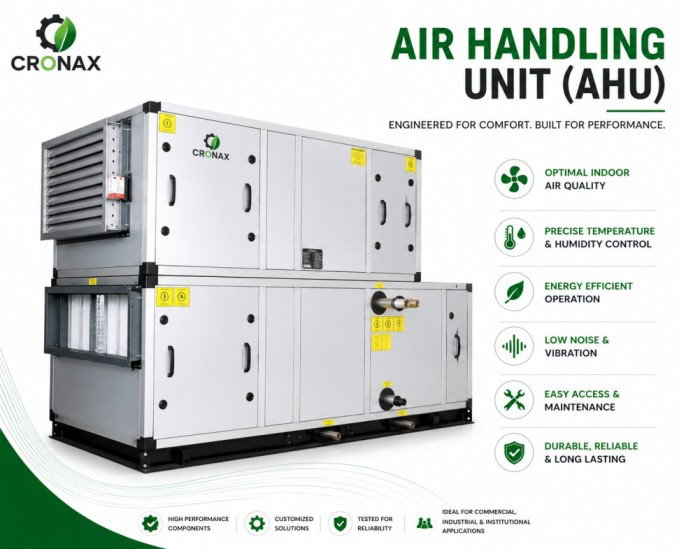
Food safety audits rarely start with the production line. They often start further back — at the air-handling system that quietly conditions every cubic metre of air moving through the plant. In food processing, contamination control isn't just about surfaces and hands; it's about the air itself, and that comes down to how well the AHU room and the unit inside it are designed and maintained.
Why Air Quality Is a Food Safety Issue, Not Just a Comfort One
Airborne contaminants. Dust, mold spores, bacteria that travel on particles. Can land on exposed food items, packaging lines, and equipment. In a food processing plant, this isn't a possibility; it's a real path for contamination that food safety standards specifically manage. The AHU filters, adjusts, and moves air through the building, and the AHU room determines whether that system can work properly every day.
The AHU Working Principle in a Food Processing Context
Understanding how the AHU works helps explain why the room design is so important. In a cycle, the unit takes in outside air, and return air passes it through filters to remove tiny particles, adjusts temperature and humidity across cooling or heating coils, and then sends the treated air through ducts into production and storage areas. In food plants, this process often needs filters and more stable humidity than a regular office building because temperature and moisture directly affect food safety and how long the product lasts.
If any part of this process is broken. A filter, uneven air movement, or changes in humidity. The risk of contamination increases even if everything else in the plant is clean and well-managed.
How the AHU Room Supports This Process
Preventing cross-contamination at the source: An AHU room located too close to waste storage, loading docks, or chemical storage risks drawing contaminated air into the system before it's even filtered. Proper placement is one of the most basic but frequently overlooked contamination control measures.
Allowing consistent filter maintenance: Filters in a food processing AHU need regular replacement to stay effective. A cramped or poorly designed AHU room makes this harder to do consistently, and skipped or delayed filter changes are a common, avoidable contamination risk.
Managing humidity and condensation: Food plants often deal with high moisture loads from washing, cooking, or processing. The AHU room needs proper drainage and ventilation to prevent condensation buildup, which can otherwise become a breeding ground for mould and bacteria right at the source of the air supply.
Supporting pressure control between zones: Many food facilities need positive or negative pressure zones to prevent airborne contamination moving between raw material areas and finished product areas. This pressure balance is managed through the AHU system, and the room design has to support the ductwork and control infrastructure needed to maintain it.
Reducing vibration-related wear: Continuous operation puts strain on AHU components over time. A well-isolated AHU room reduces vibration-related wear, which indirectly supports contamination control by keeping the system running reliably without unexpected failures.
What Happens When AHU Room Design Is Overlooked
Food safety audits and certifications increasingly scrutinize air handling systems as part of a broader contamination control review. A facility with a poorly designed AHU room risks more than higher energy costs — inconsistent filtration, humidity problems, and pressure control failures can all show up as audit findings, product recalls, or shelf-life issues that are far more costly than getting the room design right in the first place.
Choosing an AHU Built for Food Processing Environments
Because food processing plants have specific hygiene and humidity control needs, it helps to work with a manufacturer that understands how the AHU working principle applies to this industry specifically, not just general commercial buildings. Cronax Industries is one manufacturer that builds AHUs suited to food processing applications, with attention to filtration quality, humidity control, and the kind of consistent performance food safety audits look for.
When planning or upgrading an AHU room for a food processing plant, involving a manufacturer early in the layout process tends to produce better long-term results than treating the AHU as a standalone purchase. Cronax Industries works with facilities to configure units around the specific AHU room space and contamination control needs of the plant.
Questions to Ask Before Finalizing a Design
- How is the AHU room positioned relative to potential contamination sources like waste or loading areas?
- What filtration grade is appropriate for our specific production process?
- How is humidity managed to prevent condensation buildup in the AHU room?
- Can the system support the pressure zoning our facility requires?
A manufacturer experienced with food processing applications, such as Cronax Industries, should be able to answer these directly and help plan both the AHU specification and the room layout accordingly.
Bottom Line
In food processing plants, contamination control depends on more than surface cleaning and hand hygiene — it depends on the air itself, and that traces directly back to the AHU room. Understanding the AHU working principle and getting the room design right, from filtration access to humidity control to pressure zoning, is a foundational part of keeping a food plant compliant and its products safe. Working with an experienced manufacturer like Cronax Industries helps food processing facilities get this right from the start.
